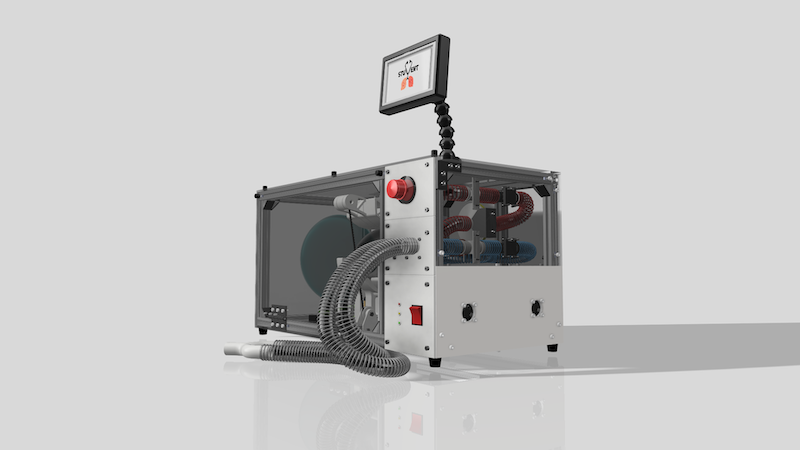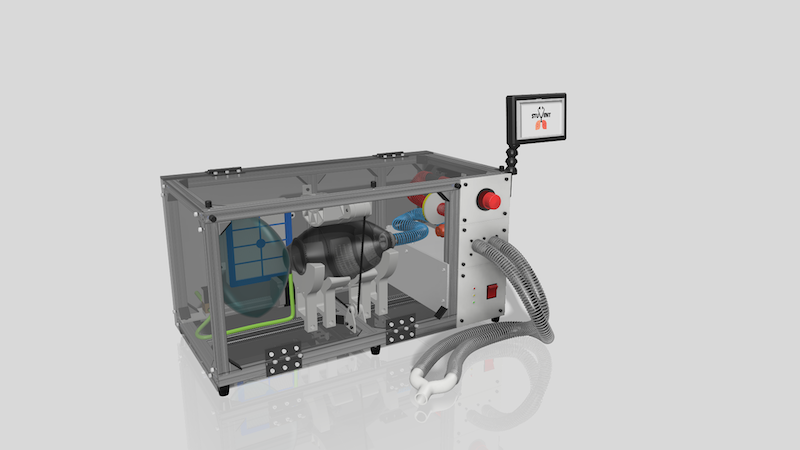
STUVENT
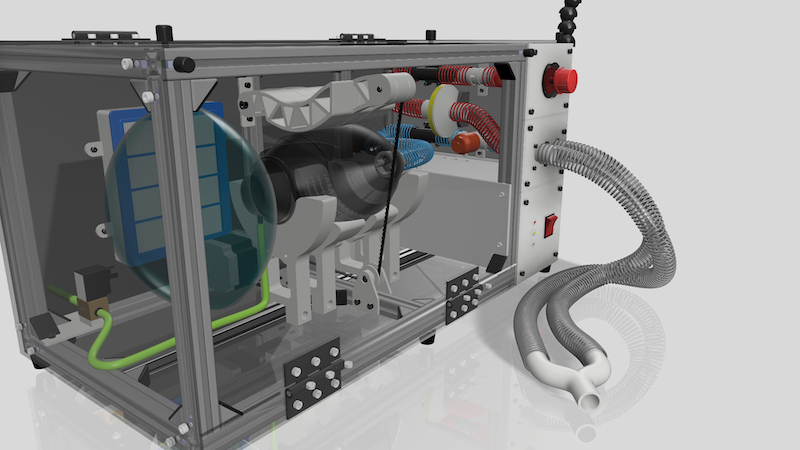
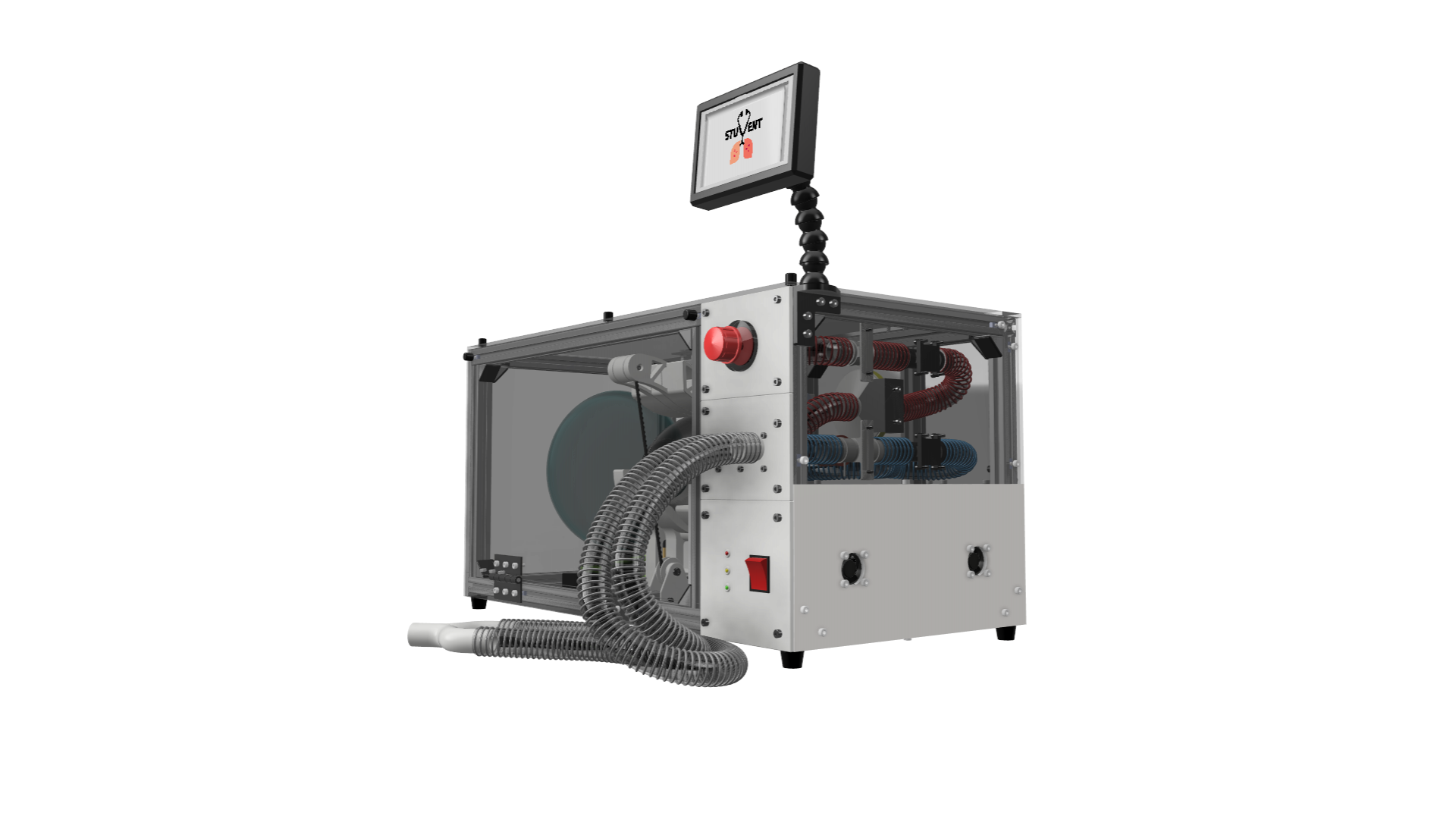
With the arrival of the first COVID-19 wave and the resulting conversion of universities to distance learning, the conditions for a course at the FH Technikum Wien were redefined. A group project as part of the master’s program in mechatronics and robotics, in which a low-cost ventilator was to be conceptualized, was the result.
The basis and framework for the project was the Agorize Code Life Ventilator Challenge (https://www.agorize.com/de).
The team:
Christoph Auer, Katrin Clauss, Stefan Haberl, Jakob Hörbst, Julian Katzenschwanz, Cajetan Koschat, Stephanie Kump, Manuel Schweiger, Julia Tomasch and Wolfram Walenta.
My tasks in the project:
° role of the team leader
° mechanical design
° CAD design
° design in general
The goal:
A low-cost open source and open hardware ventilator for use in extreme emergencies. The patient should be able to be ventilated invasively, non-invasively, supportively and fully automatically with the device. The following items should be implemented:
Settings:
° Inspiratory and expiratory pressures.
° Tidal volume
° Respiration rate
° FiO2 (oxygen saturation)
Alarms:
° Overpressure or underpressure
° flow rate deviations
° Oxygen level irregularities
Additional:
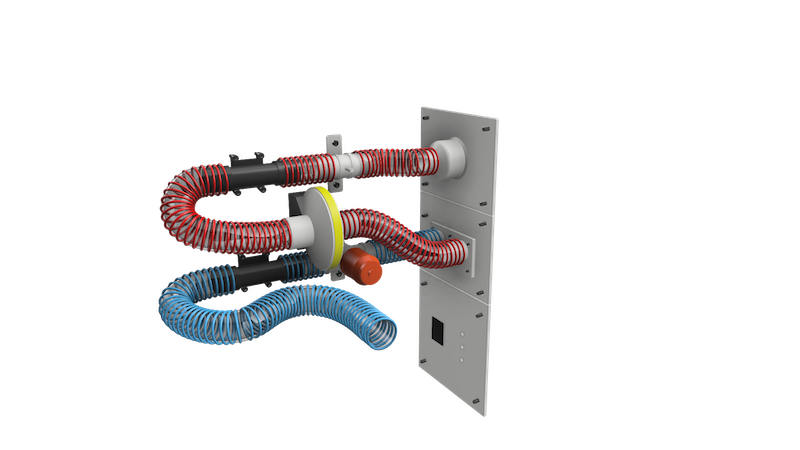
° filters for inhaled and exhaled air
° ease of use
° readily available materials
Approach:
° requirements research
° functional model
° Research and selection of possible concepts
° impact model
° Detailed research
° Component selection
° CAD design
° Communication via MS teams (weekly jour fixe, defining work packages, organizing and sharing documents)

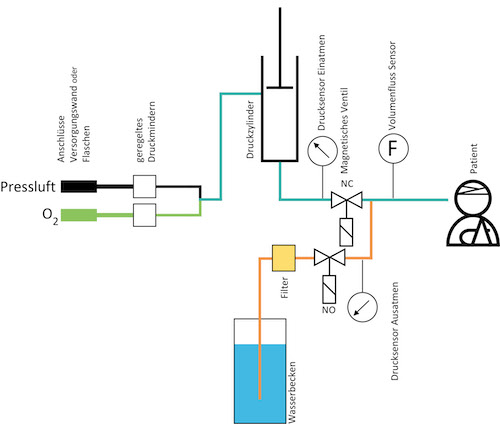
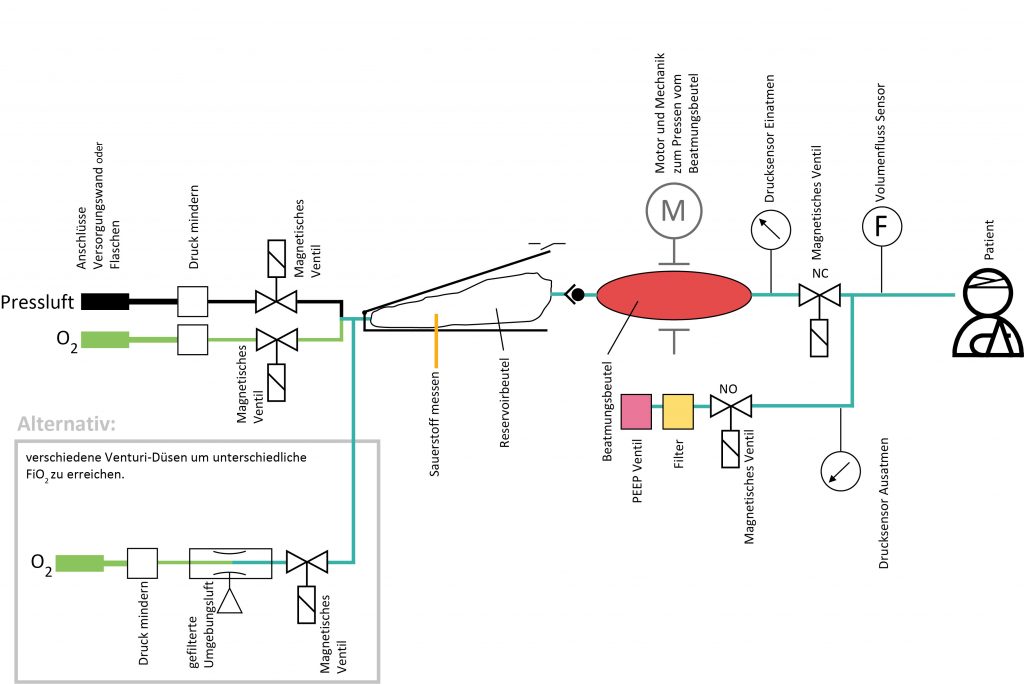
After comparing the concepts and selecting the hardware, it was possible to create an impact model.

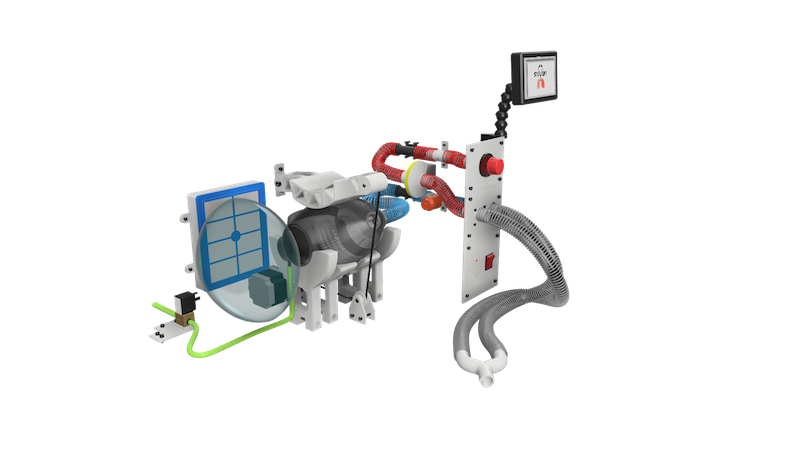
Design:
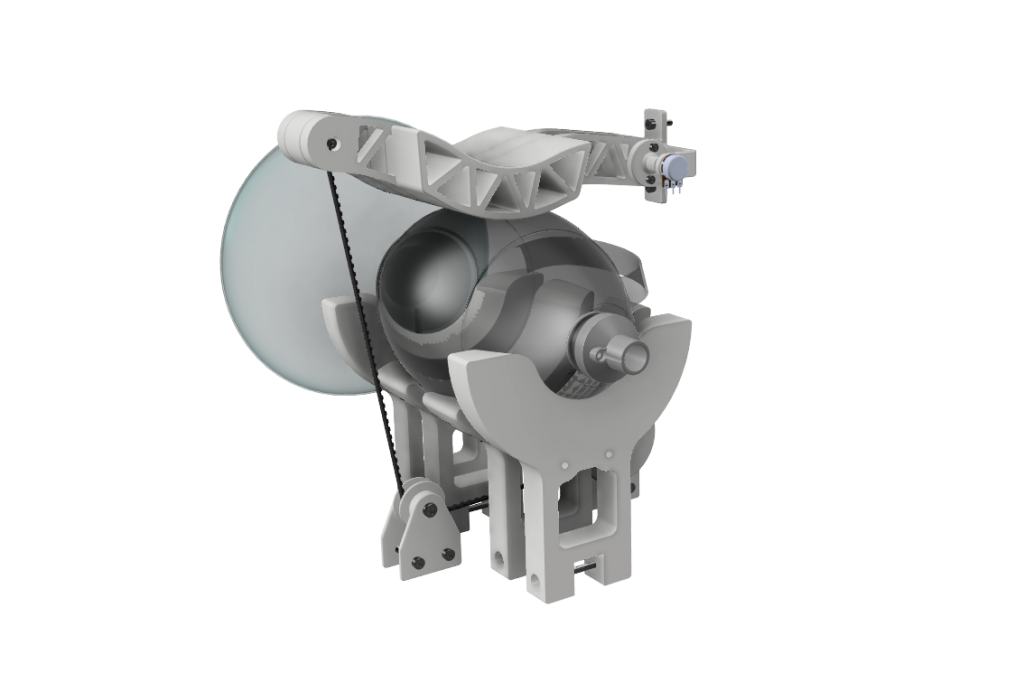

Gallery: